Thua Thien Hue
Bắc Trung Bộ
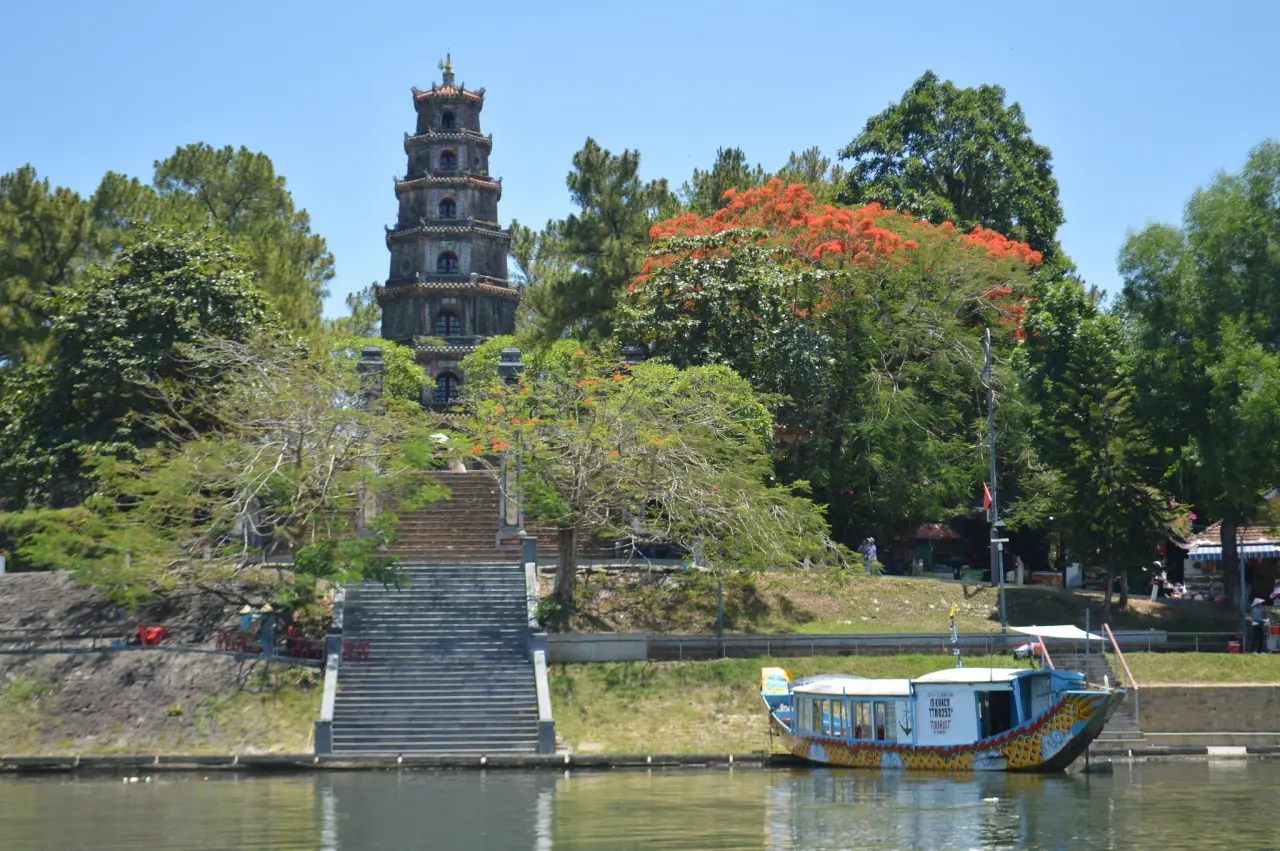
The Phuoc Duyen tower seen from the river · Valeria Drozdova · Pexels License
A serene former imperial capital by the Perfume River, preserving royal heritage and refined cuisine.
Hue carries an ancient, nostalgic beauty. The complex of Nguyen Dynasty monuments, solemn royal tombs, and Thien Mu Pagoda mirrored in the Perfume River. The people of Hue are gentle, their speech sweet, and their royal-court cuisine elaborate down to the last detail. To come to Hue is to live slowly and to listen.
Best time to visit: January–April, avoiding the late-year rainy season
Local specialties
- Bun bo Hue (Hue beef noodle soup)
- Com hen (clam rice)
- Banh beo, nam, loc
- Hue sweet soups (che Hue)
Places (19)
Thien Mu Pagoda
Hue's emblematic pagoda on Ha Khe hill, its seven-storey Phuoc Duyen tower mirrored in the Perfume River.
Truong Tien Bridge
Six spans and twelve sections of steel over the Perfume River, changing colour all night.
Tomb of Khai Dinh
The one imperial tomb in Hue built of concrete and European porcelain — lavish enough to have been controversial.
Tomb of Tu Duc
The loveliest of the Nguyen tombs — a poet's garden the emperor used while still alive.
Tam Giang Lagoon
South-East Asia's largest lagoon, sunset seen through a forest of fishing stakes.
Perfume River
The river that splits Hue in two, and a floating stage for Hue song every evening.
Hue Imperial City
The citadel of 13 Nguyen emperors, serene and ancient beside the poetic Perfume River.
Lang Co Beach
A curved sand spit between a brackish lagoon and the sea, at the foot of Hai Van pass.
Thuan An Beach
The beach nearest Hue, where the Tam Giang lagoon opens into the sea.
Dong Ba Market
Hue's largest market on the river bank, and a full circuit of everyday royal-city cooking.
An Dinh Palace
Khai Dinh's European-style palace, its ceilings and walls covered in murals.
Thanh Toan Bridge
An eighteenth-century tile-roofed wooden bridge among rice fields, paid for by a woman.
Thuy Xuan Incense Village
An incense-making hamlet on the road up to Tu Duc's tomb, recognisable at once by its fanned bundles of dyed sticks.
Tomb of Gia Long
The founding emperor's tomb, wild among pine forest and almost without visitors.
Tomb of Minh Mang
The most symmetrical of the Nguyen tombs — forty structures on a single straight axis.
Ru Cha Mangrove
The only remaining primary mangrove on the Tam Giang lagoon, turning gold in autumn.
Quoc Hoc High School
A pink school on the Perfume River, open since 1896 and still teaching.
Bach Ma National Park
A French hill station at 1,450m, now primary forest with the Do Quyen waterfall.
Hon Chen Temple
A Mother Goddess temple against a cliff on the Perfume River, reachable only by boat.