Ninh Binh
Đồng bằng sông Hồng
Richard Mortel from Riyadh, Saudi Arabia · CC BY 2.0
The 'Ha Long on land' with harmonious mountains and water, the ancient capital of Hoa Lu, and majestic caves.
Ninh Binh enchants with the beauty of limestone mountains mirrored in slow-flowing rivers. Trang An, Tam Coc, and Mua Cave are vivid living ink-wash paintings. This was once the first capital of the Dai Co Viet kingdom, carrying within it a thousand years of history.
Best time to visit: January–March and the ripe-rice season in May–June
Local specialties
- Mountain goat meat
- Crispy rice
- Mountain snails
- Kim Son wine
Places (12)
Hoa Lu Ancient Capital
Capital of Dai Co Viet from 968 to 1010, using the limestone mountains themselves as its walls.
Mua Cave
Five hundred stone steps up Ngoa Long mountain — the most famous panorama over Tam Coc.
Phat Diem Cathedral
A Catholic cathedral built like a Vietnamese communal house — curved roofs, ironwood columns, all stone and timber.
Tam Coc Bich Dong
Sampans rowed with the feet down the Ngo Dong river, through three caves under the karst.
Trang An
The 'Ha Long Bay on land' — winding rivers threading through limestone karsts and mysterious caves.
Bai Dinh Temple
The largest pagoda complex in Vietnam, with a three-kilometre corridor of five hundred arhats.
Kenh Ga
A floating village on the Hoang Long river with fifty-degree mineral water rising from the ground.
Thung Nham Bird Park
A bird garden in a karst valley, tens of thousands returning to roost at dusk.
Cuc Phuong National Park
Vietnam's first national park — primary tropical rainforest and a thousand-year-old cho tree.
Van Long Lagoon
The largest wetland in the northern delta, its water dead flat beneath limestone towers.
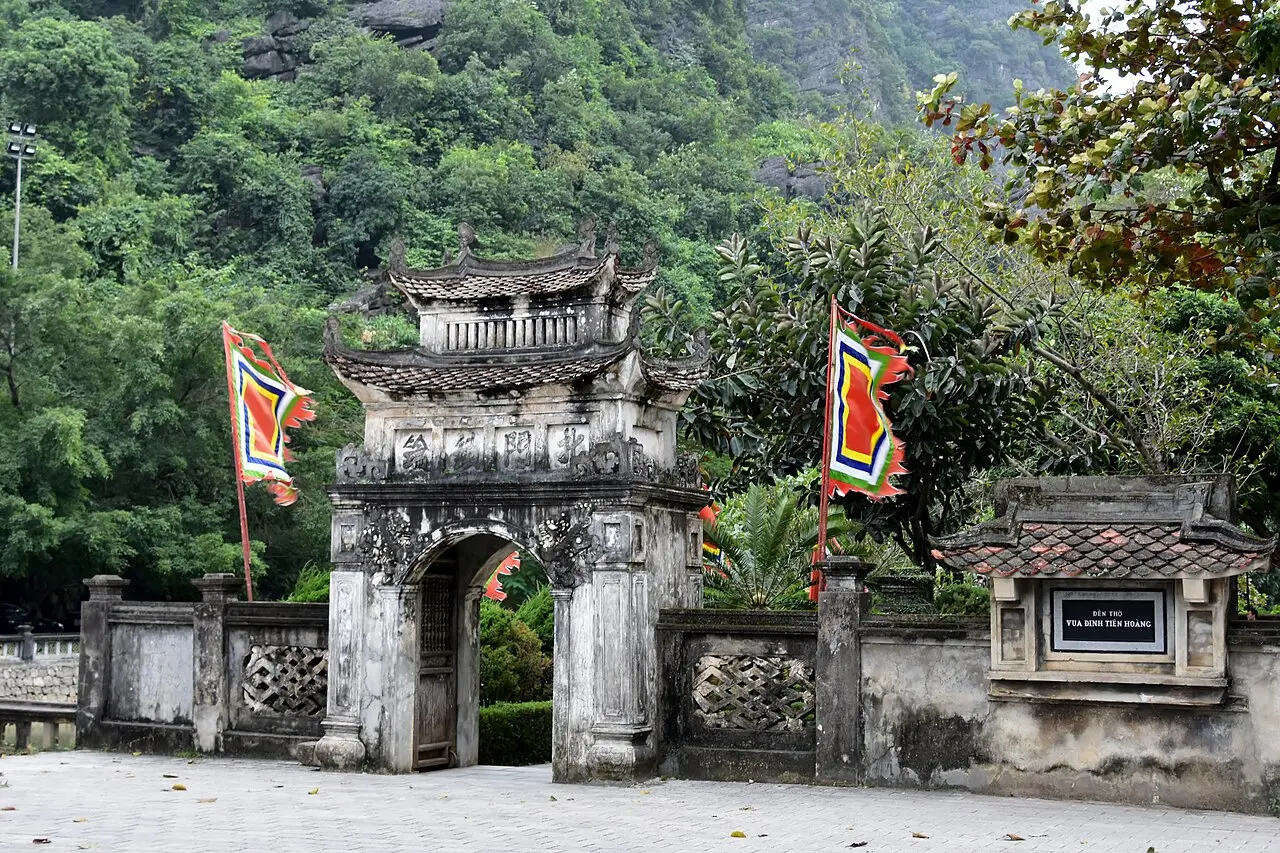
Temple of King Dinh Tien Hoang
A temple to the king who unified the country, built on the foundations of his own palace.
Am Tien Cave
A green pool in a bowl of karst — where King Dinh once kept tigers to punish criminals.