Hanoi
Đồng bằng sông Hồng
Bùi Thụy Đào Nguyên · CC BY-SA 4.0
A thousand-year-old capital of civilization, where the ancient and the modern intertwine.
Hanoi is a place where time seems to slow. The moss-covered Old Quarter, the dreamy Hoan Kiem Lake, the rows of ancient trees, and the scent of milk-flower blossoms each autumn. Hanoi's cuisine is refined, with pho, bun cha, and egg coffee. Every street corner holds a story worth listening to.
Best time to visit: Autumn (September–November), when the weather is cool and mild
Local specialties
- Pho
- Bun cha
- Egg coffee
- Steamed rice rolls
- La Vong grilled fish
Places (29)
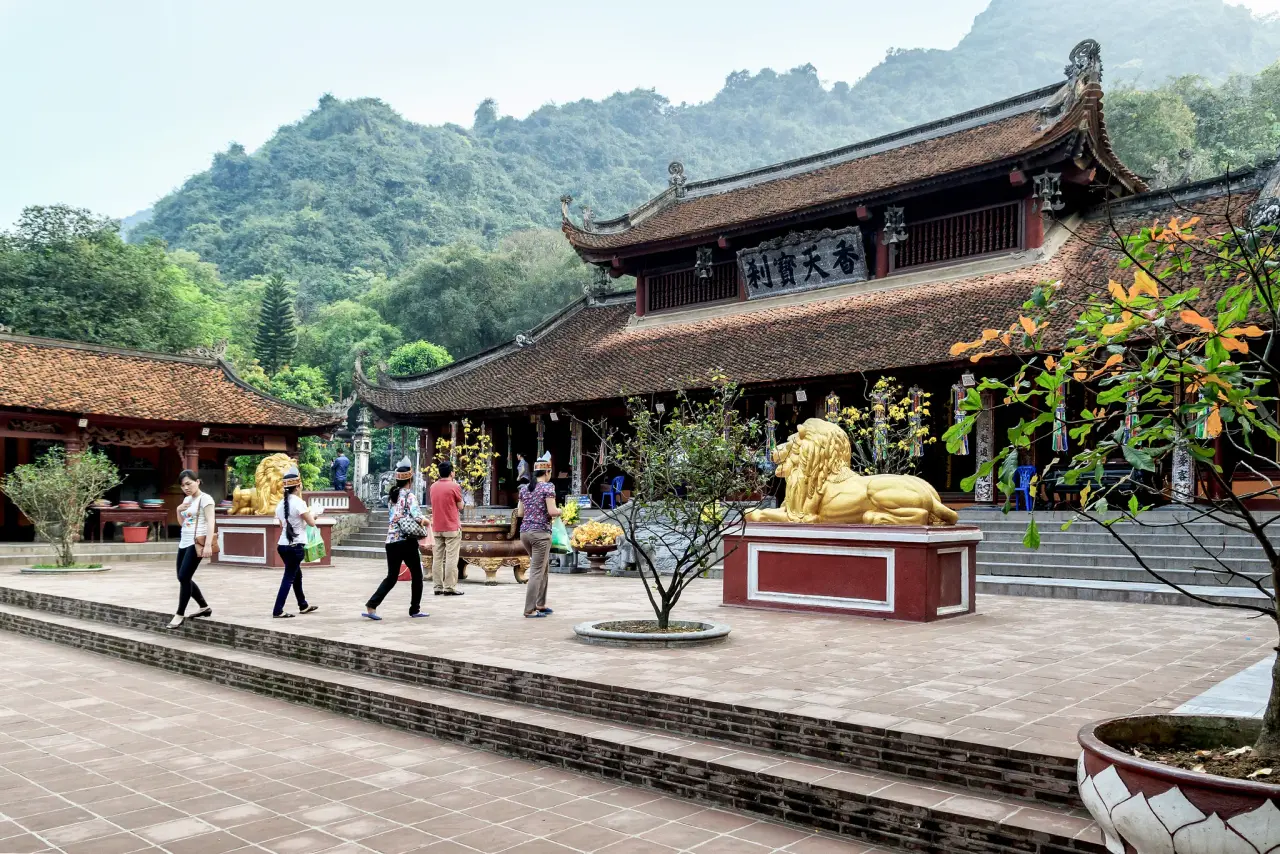
Perfume Pagoda
Quần thể chùa và động rải khắp vùng núi Hương Sơn, bắt đầu bằng một chặng đò trên suối Yến chứ không bằng đường bộ.
Tran Quoc Pagoda
The oldest pagoda in Hanoi, standing on a small peninsula reaching into West Lake.
Imperial Citadel of Thang Long
A World Heritage site where thirteen centuries of power are stacked on one patch of ground.
Hoan Kiem Lake
The heart of thousand-year-old Hanoi, where the Turtle Tower casts its reflection and the legend of the returned sword still echoes.
West Lake
Hanoi's largest lake — nearly eighteen kilometres around, and a different sunset every evening.
Ho Chi Minh Mausoleum
A block of grey granite on Ba Dinh Square, holding the body of President Ho Chi Minh.
Temple of Literature
Vietnam's first university, founded in 1070, with 82 doctoral stelae mounted on stone tortoises.
Ngoc Son Temple
A temple on Jade Island in Hoan Kiem Lake, reached by the red-painted The Huc bridge.
Vietnam Museum of Ethnology
A museum of the 54 ethnic groups, with a garden of full-size traditional houses outdoors.
Ho Chi Minh Museum
A white lotus-shaped block behind the mausoleum, telling Ho Chi Minh's life against the century he lived through.
Vietnam National Museum of History
A 1932 Indochinese-style building behind the Opera House, holding the country's finest Dong Son drums and Cham sculpture.
One Pillar Pagoda
A small wooden shrine on a single stone pillar, built after a king's dream of a lotus.
Dong Xuan Market
The Old Quarter's biggest wholesale market, its five-arched French facade still standing.
Long Bien Bridge
A steel bridge the French raised early last century, still carrying trains and motorbikes over the Red River.
Hanoi Flag Tower
A Nguyen-dynasty watchtower, one of very few parts of the old Hanoi citadel left standing whole.
Duong Lam Ancient Village
An old Vietnamese village built of laterite, birthplace of two kings, forty kilometres from central Hanoi.
Bat Trang Pottery Village
Seven centuries of pottery beside the Red River, where you can sit at a wheel and throw a bowl yourself.
Hanoi Opera House
A pale-yellow Beaux-Arts opera house modelled on the Palais Garnier, completed in 1911.
Thang Long Water Puppet Theatre
A water-puppet house on the east shore of Hoan Kiem Lake, performing year-round on a pool instead of a stage.
St Joseph's Cathedral
A neo-Gothic cathedral with weather-stained grey walls, modelled on Notre-Dame de Paris, from the 1880s.
Hoa Lo Prison
A prison the French built in 1896, later nicknamed the 'Hanoi Hilton' by the American pilots held here.
Ta Hien Street
The pavement beer street they call the 'international crossroads' — the Old Quarter at its loudest.
Tong Duy Tan Street
Hanoi's late-opening food street, known above all for herbal chicken soup and wonton noodles.
Hanoi Old Quarter
A labyrinth of 36 streets, where each lane once bore the name of a traditional handicraft.
Hanoi Train Street
A stretch of working railway running between two rows of houses, less than a metre from the doorsteps.
Tay Ho Temple
A temple to the mother goddess Lieu Hanh on a spit of land in West Lake, busiest on the first and fifteenth of the lunar month.
The Note Coffee
A café papered wall to ceiling in customers' sticky notes, written in every language going.
Lotte Observation Deck
A glass floor on the 65th storey, where the Red River and West Lake come into view at once.
Quan Thanh Temple
The northern guardian of old Thang Long, holding a four-metre black bronze statue cast in 1677.