Incheon
Vùng Thủ đô Seoul
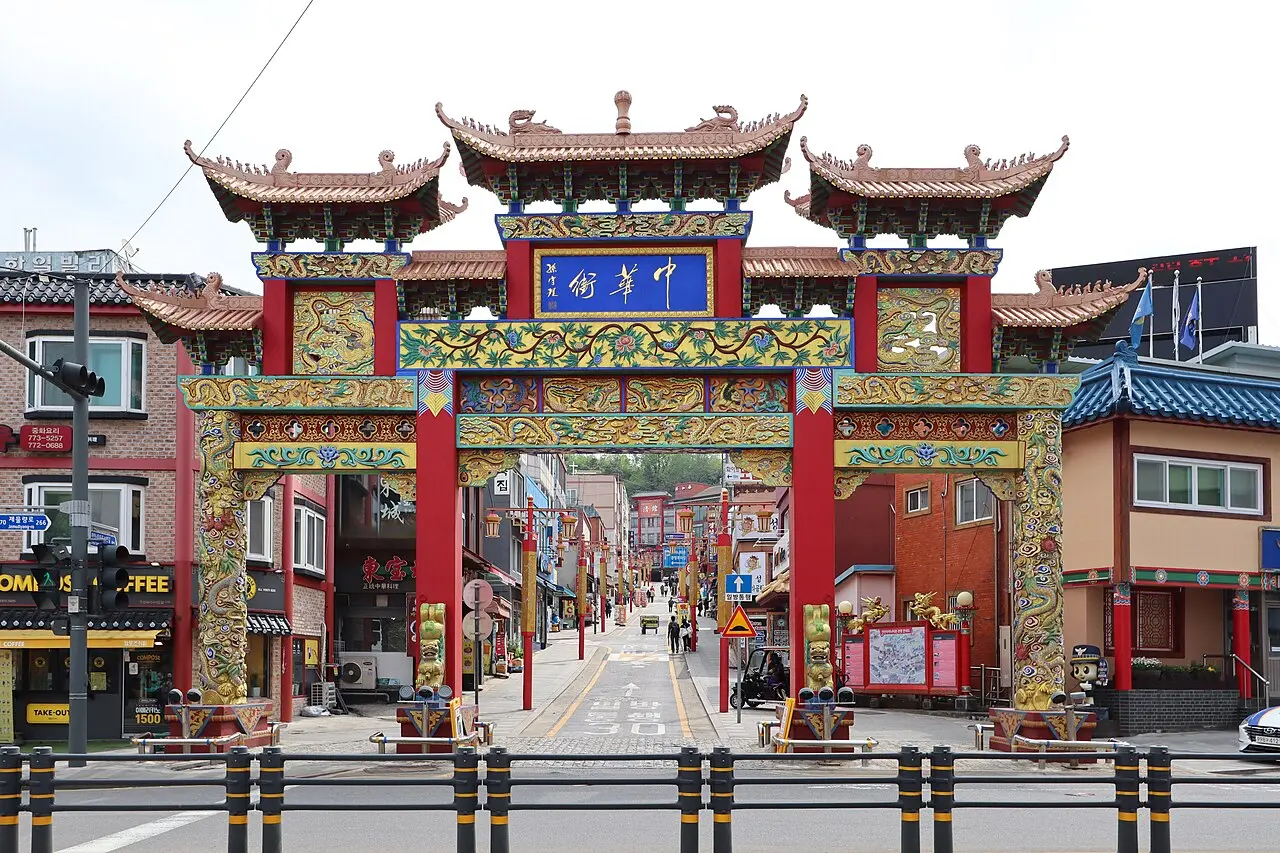
Mobius6 · CC BY-SA 4.0
Korea's aviation gateway, where an old port, a Chinatown and a city built on reclaimed sea sit side by side.
Most travellers know Incheon only from its airport, but this is where Korea opened to the world in 1883. The old port left behind a Chinatown with its famous jjajangmyeon, red-brick warehouses turned into museums, and a ferry terminal serving dozens of islands in the Yellow Sea. In the opposite direction lies Songdo — an entire city raised from reclaimed land, all glass and canals. At weekends Seoulites drive out here for seafood and sunsets.
Best time to visit: April–June and September–October
Local specialties
- Jjajangmyeon
- Grilled seafood
- Gongal-ppang bread
Places (10)
Incheon Chinatown
Korea's only intact Chinatown — and the birthplace of jjajangmyeon.
Jeondeungsa Temple, Ganghwa
A temple that sits inside an earthen fortress, with four naked figures holding up the eaves because of an old grudge.
Songdo Central Park
A city reclaimed from the sea and designed from scratch, with a saltwater canal running between glass towers.
Sorae Wetland Ecological Park
Abandoned salt pans turned marsh, where wooden windmills stand among pools that change colour with the season.
Songwol-dong Fairy Tale Village
An ageing neighbourhood repainted as a storybook world, a familiar tale on every wall.
Ganghwa Dolmen Site
Prehistoric stones standing in open fields, older than the last of Egypt's pyramids.
Incheon Open Port Street
A few streets of banks, consulates and warehouses left exactly as they were built when Korea opened the port in 1883.
Ganghwa Peace Observatory
Standing about two kilometres from the North Korean shore, close enough to watch people working the fields.
Muui Island & Hanagae Beach
An island right beside Incheon airport, where the tide retreats hundreds of metres and wooden huts stand on the sand.
Wolmido Island
An island joined to the mainland by a seafront strip of seafood restaurants and fairground music.