Gangwon
Gangwon
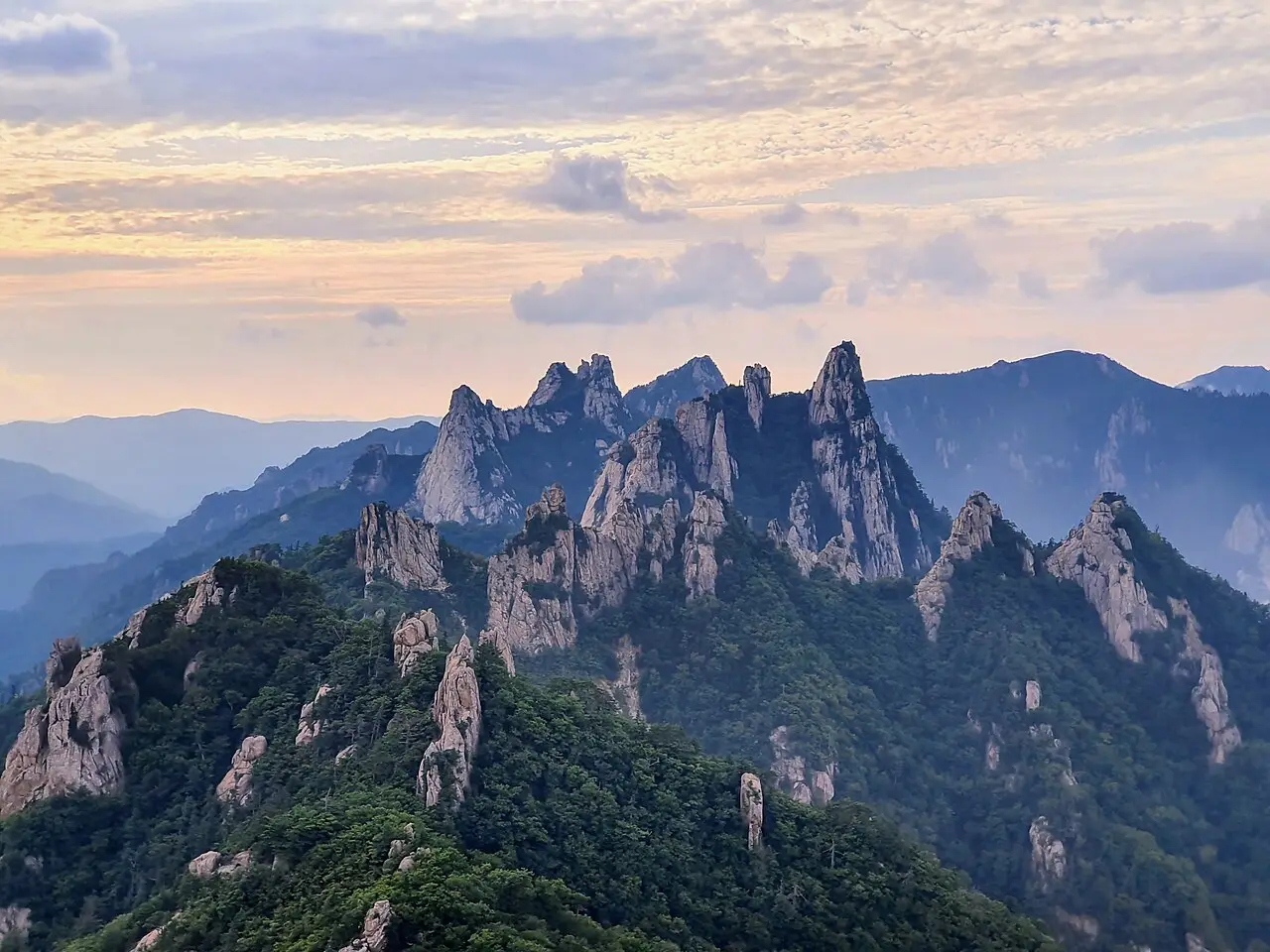
Taewangkorea · CC BY-SA 4.0
A province of high mountains and the East Sea — Seoraksan, the snow plateau of Pyeongchang and beaches made for sunrise.
Gangwon is the emptiest half of the country's east: the Taebaek range runs its whole length, forest on one side, a drop into the East Sea on the other. In autumn the red leaves start at Seoraksan and spread down the peninsula. In winter deep snow covers the Pyeongchang plateau — host of the 2018 Olympics — and the ski resorts stay open all season. The coast at Gangneung, Sokcho and Jeongdongjin is where Seoul takes the train to watch the sunrise, eat squid straight off the boat and drink coffee facing the waves.
Best time to visit: September–October (autumn colour) and December–February (snow)
Local specialties
- Chuncheon makguksu
- Dakgalbi
- Sokcho squid
- Gangwon potatoes
Places (14)
Seoraksan National Park
Granite walls rising close to the sea, where every Korean autumn begins.
Taebaeksan National Park
A sacred mountain with a sky altar on its summit, where yews freeze into a crystal forest in winter.
Nami Island
A crescent island of dead-straight tree avenues that change colour four times a year.
Daegwallyeong Sky Ranch, Pyeongchang
Sheep pasture on a 1,000-metre plateau — and the snow country of the 2018 Winter Olympics.
Gyeongpo Beach, Gangneung
Gangneung's long stretch of sand, with a brackish lagoon and a pine wood right behind it.
Chuncheon & Soyang Lake
A city ringed by three lakes, and the birthplace of dakgalbi.
Naksansa Temple
A clifftop temple with a 15-metre white Avalokiteshvara looking out over the East Sea.
Hwanseongul Cave, Samcheok
East Asia's largest limestone cave, with chambers thirty metres high and a waterfall inside the mountain.
Jeongdongjin
The railway station closest to the sea in the world, where the country gathers for New Year sunrise.
Abai Village, Sokcho
A village of northern refugees, crossed for seventy years by a raft pulled hand over hand on a steel hook.
Odaesan & Woljeongsa Temple
A kilometre of ancient pines leading to a temple that holds a nine-storey octagonal stone pagoda.
Ojukheon House
A 500-year-old wooden house, birthplace of Yi I and the painter Shin Saimdang — two faces on Korean banknotes.
Anmok Coffee Street, Gangneung
A beach with a whole street of roasteries, which began with vending machines on the sand.
Mureung Valley, Donghae
A flat slab of rock the size of a football pitch mid-stream, covered in the carved names of old scholars.