Quang Nam
Duyên hải Nam Trung Bộ
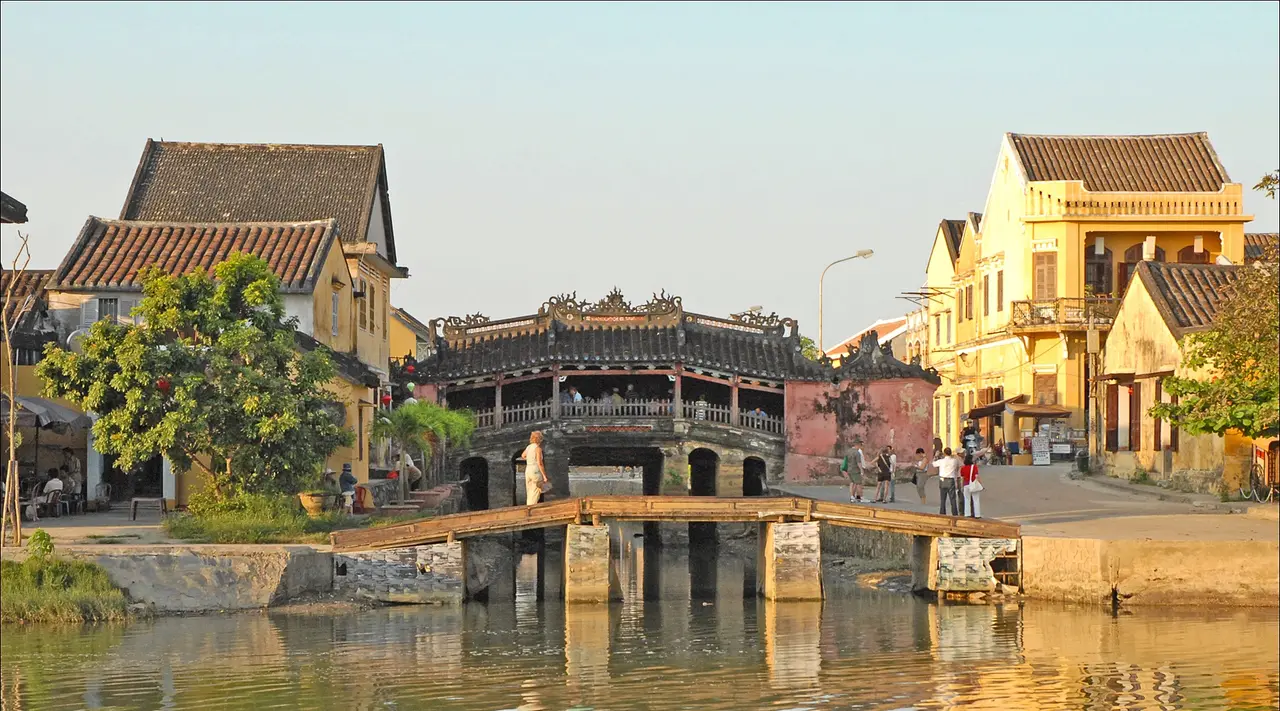
User dalbera on Flickr · CC BY 1.0
A land of heritage with Hoi An Ancient Town and the My Son Sanctuary, rich in culture and cuisine.
Quang Nam is where two world cultural heritages converge: Hoi An Ancient Town shimmering with lanterns and the My Son Sanctuary of the ancient Champa kingdom. Craft villages, An Bang Beach, and peaceful countryside make a Quang Nam both ancient and serene.
Best time to visit: February–April, dry and pleasant
Local specialties
- Cao Lau
- Mi Quang
- Hoi An banh mi
- Chicken rice
Places (14)
Japanese Covered Bridge
A roofed bridge raised by Japanese merchants over four centuries ago — Hoi An's emblem, printed on the 20,000-dong note.
Hoi An Ancient Town
A golden-age trading port, shimmering with lantern light each evening along the Hoai River.
My Son Sanctuary
The religious centre of the Champa kingdom for nearly a thousand years, in a valley closed by mountains.
An Bang Beach
Hoi An's beach since Cua Dai eroded away — low thatched bars, wooden chairs, sunset straight off the sand.
Cua Dai Beach
Where the Thu Bon river reaches the sea — and where central Vietnam's coastal erosion is most plainly visible.
Hoi An Night Market
The lantern street across An Hoi bridge, where Hoi An lights up once the sun is gone.
Cham Islands
Eight islands off Hoi An, a World Biosphere Reserve and the first place in Vietnam to ban plastic bags.
Faifo Coffee
A café with a rooftop over the sea of old-town tiles — Hoi An seen from above.
Fujian Assembly Hall
The largest assembly hall in the old town, dedicated to Thien Hau, protector of those who go to sea.
Kim Bong Carpentry Village
A carpenters' village across the Thu Bon, where the frames holding up the old town were made.
Tra Que Vegetable Village
A herb village fertilised with weed dredged from the lagoon — the smell of this village is the smell of every plate in Hoi An.
Tan Ky House
A merchant house nearly two centuries old, where Vietnamese, Chinese and Japanese architecture meet under one roof.
Reaching Out Teahouse
A silent teahouse staffed by deaf servers — you order with engraved wooden blocks, without saying a word.
Bay Mau Coconut Forest
A brackish water-coconut forest travelled by basket boat — once a wartime base, now Hoi An's loudest afternoon.