Gyeongnam
Nam Gyeongsang
Bernard Gagnon · CC0
The province of the southern archipelago, of Haeinsa's woodblocks and of coastal roads.
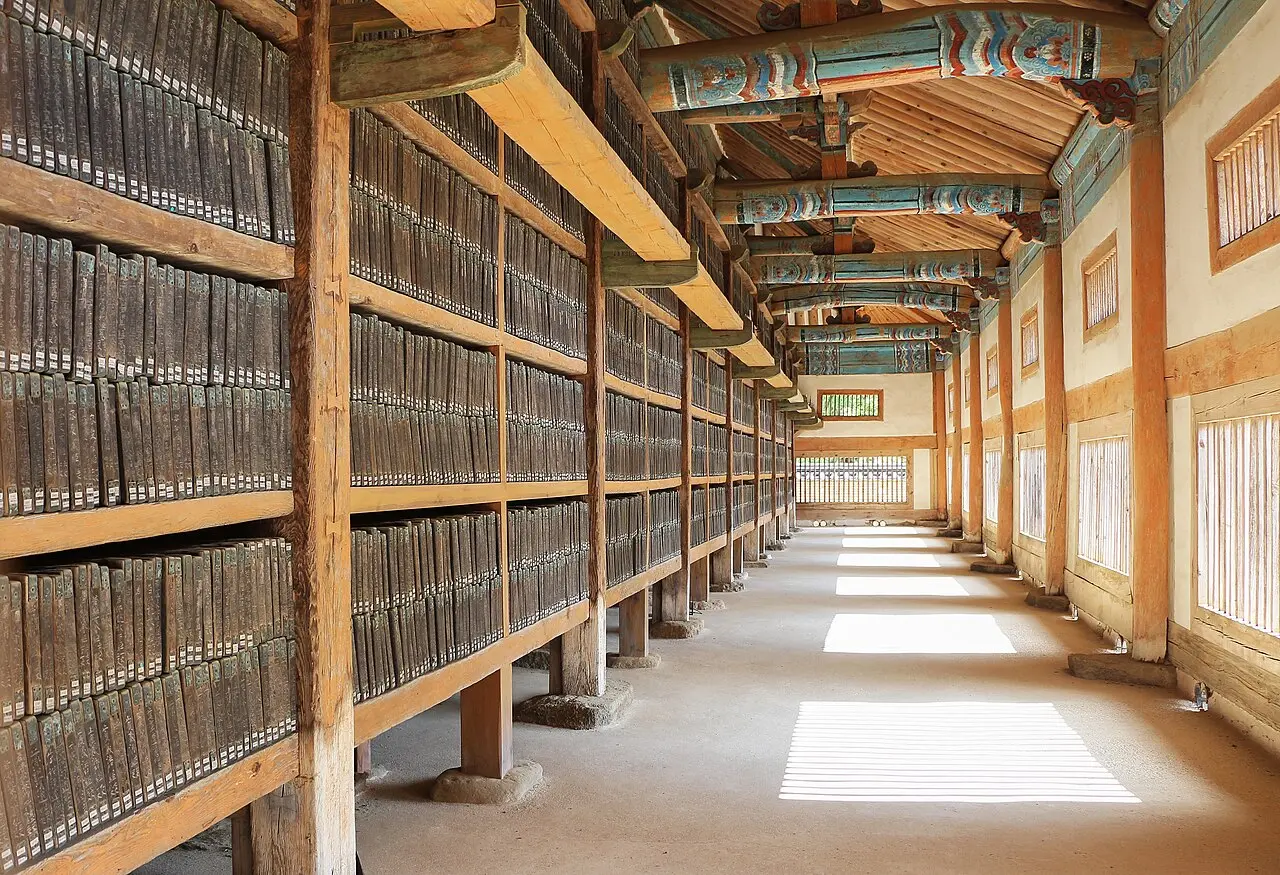
South Gyeongsang embraces the sea where the land shatters into hundreds of islands. Tongyeong and Geoje live by fishing and ferries; Namhae has terraces that fall straight into the water; Jinju keeps a fortress bound up with the Imjin War and an October lantern festival. Deep in the Gayasan mountains sits Haeinsa, where 81,258 woodblocks of the Buddhist canon have survived seven centuries in naturally ventilated wooden halls. The food here tastes of the sea, and much of it is eaten raw.
Best time to visit: April–June and September–November
Local specialties
- Chungmu gimbap
- Jinju bibimbap
- Braised pufferfish
- Tongyeong oysters
Places (12)
Haeinsa Temple & the Tripitaka Koreana
Home to more than 81,000 13th-century woodblocks of the Buddhist canon, kept perfect by storehouses that breathe.
Jinhae Cherry Blossom
Three hundred and sixty thousand cherry trees burying a naval town, including Korea's most photographed railway and stream.
Jirisan National Park
Korea's first national park, the largest massif on the mainland, with a ridge walk that takes three days.
Mireuksan Cable Car, Tongyeong
From the summit, hundreds of islands scattered across the Hallyeohaesang sea like broken stone.
Daeseong-dong Gaya Tumuli, Gimhae
The burial mounds of a kingdom history pushed to the margins, inscribed by UNESCO in 2023.
German Village, Namhae
A village of red-tiled roofs built on the Namhae coast by returning miners and nurses who had worked in Germany.
Daraengi Terraced Fields, Namhae
More than a hundred tiny terraces stepping down the mountain to the sea.
Jinju Fortress & the Namgang Lantern Festival
A riverside fortress tied to two brutal sieges, lit each October by thousands of lanterns.
Tongyeong & Dongpirang Village
A port town looking out on hundreds of islands, with a hillside village saved by its murals.
Oedo Botania, Geoje
A rocky island turned into a Mediterranean garden by one couple over thirty years.
Upo Wetland, Changnyeong
Korea's largest natural freshwater marsh, formed in the age of dinosaurs and never drained.
Windy Hill & Geoje Coast
A bare grass hill running out to sea with a wooden windmill, and wind strong enough to make standing hard.