FechTin Go · South Korea · Seoul
Ikseon-dong Hanok Alleys
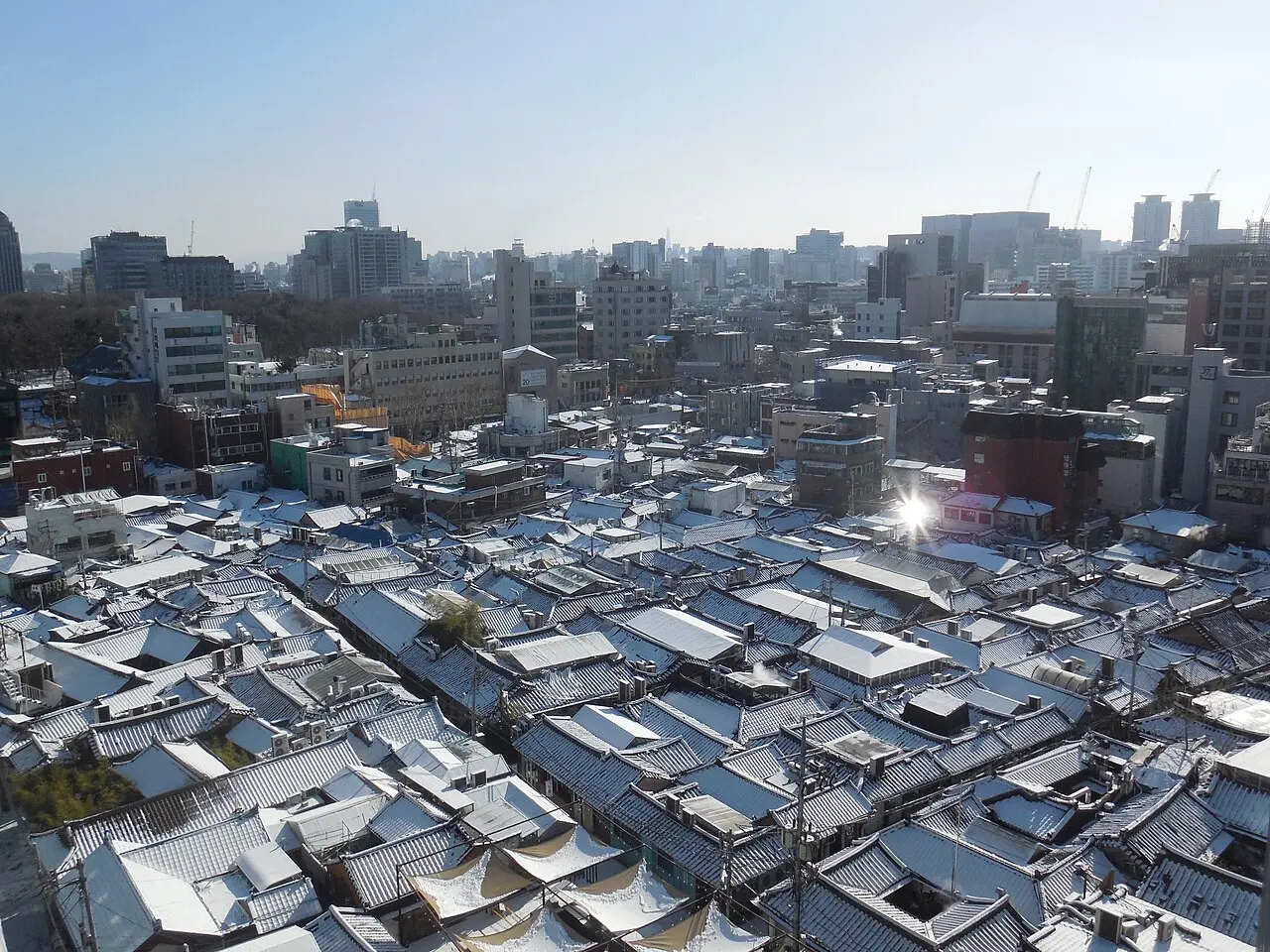
오모군 · CC BY 3.0
A working-class hanok quarter from the 1920s, now a maze of narrow lanes with cafés hidden behind wooden doors.
If Bukchon is the hanok of officials, Ikseon-dong is the hanok of ordinary people: small houses with tiny square courtyards, built by the dozen in the 1920s for workers moving into the city. The quarter came close to demolition and was saved by the very thing that made it hard to clear — lanes too narrow for machinery. Now every wooden door opens onto a café, a bookshop or a makgeolli bar, the old tiled roofs untouched and the interiors entirely modern. The alleys are tight enough that two people must turn sideways to pass, which is exactly why it is best at night, when the paper lanterns come on.
Visitor information
When is the best time to visit Ikseon-dong Hanok Alleys?
Year-round; best in the evening
How long do you need at Ikseon-dong Hanok Alleys?
1.5–2 hours
What are the opening hours of Ikseon-dong Hanok Alleys?
The alleys are open all day with no set hours; cafés and restaurants generally run 11:00–23:00
Did you know
- The hanok here were built mostly in the 1920s, for ordinary working families.
- The quarter was once slated for redevelopment and was preserved from the mid-2010s.
- The narrowest lane is barely a metre wide.
- It sits directly behind Jongno, a few dozen steps from Jongno 3-ga station.
Travel tips
- The cafés are small and fill up — go before 11am or after 8pm.
- Come in the evening: lamplight through paper doors beats the daytime view.
- The lanes are very tight; avoid suitcases and large groups.
Source: https://korean.visitkorea.or.kr/
Updated: 2026-08-04