Gwangju
Honam (Jeolla)
LERK · CC BY-SA 4.0
The city of the 1980 democracy movement, now the art and food capital of the southwest.
Gwangju carries the memory of May 1980, when its people took to the streets for democracy and were met with force; the archive of those days is now in UNESCO's Memory of the World. The city does not avoid that past — it is told in the square, the cemetery and the museums. Alongside it, Gwangju is a city of art: the Gwangju Biennale is the largest contemporary art exhibition in Asia, and its dinner tables are famous for side dishes so numerous they have to be stacked.
Best time to visit: April–June and September–November
Local specialties
- Gwangju duck soup
- Hanjeongsik banquet table
- Gwangju leaf kimchi
Places (7)
May 18th Democracy Square & National Cemetery
Where the 1980 Gwangju Uprising happened, and where those who died in it are buried.
Asia Culture Center
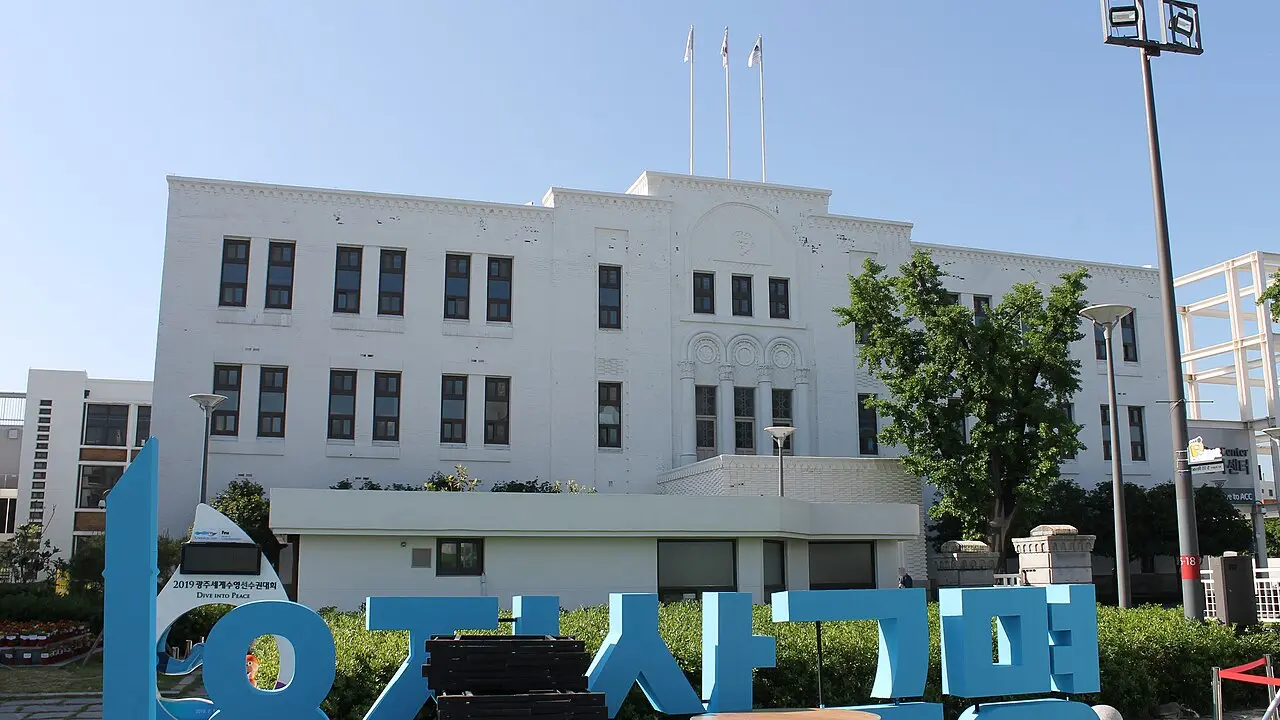
A museum almost entirely underground, built around the very building where the 1980 crackdown ended.
Gwangju Biennale
Asia's oldest contemporary art biennale, founded in 1995 in memory of those killed in 1980.
Daein Market & Night Market
A market close to dying that artists moved into, and which now lights up every Saturday night.
Penguin Village, Yangnim-dong
Lanes covered in dead clocks, old fans and cassette radios — a museum of discarded things the neighbourhood built itself.
Yangnim-dong Historic Village
An early 20th-century missionary quarter of red brick, reborn as an artists' neighbourhood.
Mudeungsan National Park
The mountain that holds Gwangju, crowned with hexagonal stone columns standing like pipes.