Ulsan
Nam Gyeongsang
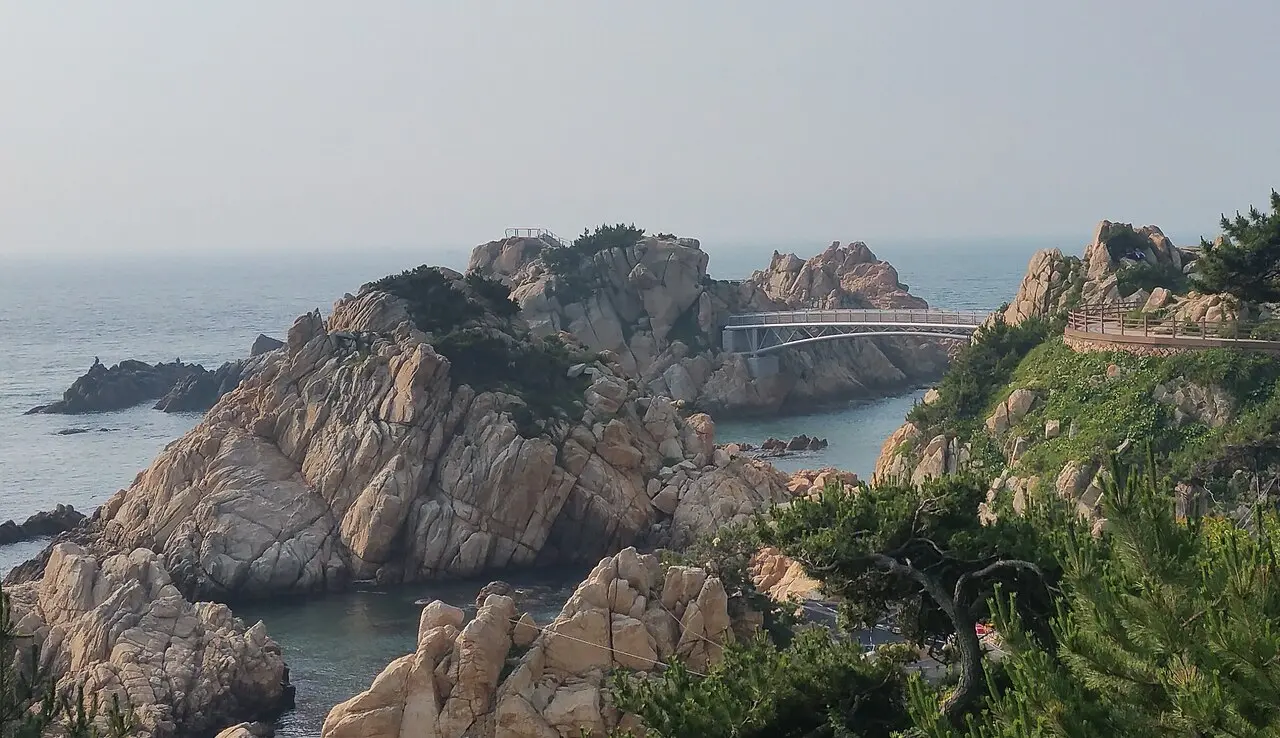
Shinfull · CC BY-SA 4.0
An industrial capital on the East Sea that also holds prehistoric rock art and the earliest sunrises.
Ulsan builds the ships and cars of Korea, but beside its factories lies some of the finest rocky coast on the peninsula. The Taehwa River, once killed by pollution, runs clear again with its ten-mile bamboo belt and its evening egrets. Upstream is the Bangudae cliff, carved with whale hunts six thousand years ago — Ulsan was once a great whaling port, a history now left to a museum and a controversial dish. Ganjeolgot cape takes the country's first sunrise.
Best time to visit: April–June and September–November
Local specialties
- Ulsan hot fish soup
- Chive pancakes
- Grilled seafood
Places (8)
Daewangam Park
A century-old pine wood leading to red rocks where a Silla queen is said to have become a sea dragon.
Ganwoljae & the Yeongnam Alps
A field of silver grass on a nine-hundred-metre saddle, turning silver in October and rolling in the wind.
Jujeon Pebble Beach
A beach with no sand at all, only round black pebbles — and the sound the backwash leaves behind.
Jangsaengpo Whale Culture Village
Korea's last whaling port, now a museum to a trade banned since 1986.
Ganjeolgot Cape
The cape that takes the peninsula's first sunrise every New Year's Day.
Taehwagang Bamboo Grove
A ten-mile bamboo belt along a river that once died of pollution and now fills with egrets.
Bangudae Petroglyphs
Prehistoric whale-hunting scenes carved into a cliff — the world's oldest record of whaling.
Ulsan Bridge Observatory
The one place to see Ulsan's industrial machine whole: shipyards, refineries and the country's longest suspension bridge.